
Sunshine Nut Company Aims To Be Synonymous With Hope, Opportunity And Transformation
December 28, 2015 | 4 min to read
Not many people walk around an orphanage in Africa and say, “Hey, that kid would be a great employee some day!”
Meet Don Larson, founder of Sunshine Nut Company. Three years ago this high flying executive – literally high-flying as he owned a hot air balloon – sold it all and moved to Mozambique, Africa. Larson was a former food company executive at a number of companies – the most notable of which being Hershey’s Chocolate.
It was through a cocoa purchasing trip that Don made his first visit to Africa. In surveying the cocoa yields he was confronted with striking poverty. Children walking miles for water, living in huts, and unable to attend school. Amidst what seems like ‘unresolvable’ poverty, there seemed to be tremendous agricultural potential.
The fields and local markets of the many villages were stocked full of fresh produce, but only when in-season. When Larson offered free advice to the government of Tanzania, he realized other consultants were advising the government to export fresh produce to Europe. Larson examined the situation and thought the crops would surely spoil in transport or sit at the port. He believed their agricultural potential could best be harvested through food preservation.
Realizing they could help, the Larson family sold it all and moved to Mozambique – the former world leader in cashew production. They purchased an existing building and renovated it to world class standards to be the factory of Sunshine Nut Company. They hired 30 young men and women, the majority of whom grew up as orphans or vulnerable children.
“By locating near the orchards, we can go ‘tree to pouch’ in a very short time. It results in an incredibly fresh cashew. Many cashews go through middlemen and warehouses and can take up to one or two years to make it to market. We are redefining the way a fresh cashew should taste.”
A former Porsche-driving suburbanite, Larson now drives a beat up 90’s minivan, fondly named “The Love Van”, through the bush of Africa – often to survey potential expansion sites.
“On our last trip to one of the growing regions we met with some supportive leaders of the Mozambican government. They asked us how much land we needed as if there was no limit to what we could have; They’re so thrilled we are here. When I told them we just need an acre or two for each factory, they were a bit stunned,” says Don. “We want to work with the farmers, not work them off their land.”
Despite the humbleness of such a company, their big plans are mini-sized. In an era where multinationals are coming in and parceling up land for big plantations that dislocate villages, Sunshine Nut Company is pursuing a different approach.
“The plan is to build many mini-factories where no one else would. By locating in rural areas, we can bring opportunity right to the poorest growing regions. Every mini-factory will have an additional room that serves as a community room where we can offer medical care, microfinance, educate growers on best practices, educational support for local teachers, and provide other hand-ups that promote growth from within,” says Larson.
In 1975, Mozambique was the world leader of cashews. Upon gaining independence, a civil war started, investments pulled out, and World Bank policies decimated the industry. The country slipped to the third poorest in the world. The annual cash income for a rural farming family is as low as $31 per year. In a nation where 80% of the population is subsistence farmers, cashews can provide opportunity.
Each cashew requires hand shelling and peeling. It is a labor intensive project that can bring employment to thousands if done in-country. With 50 employees at their roasting plant, they estimate to employ 1000 people to shell and peel, and provide fair pricing to 50,000 smallholder farmers.
On a typical day, Don heads off to the factory while his wife Terri, a former school teacher, goes to the children’s centers that the company supports. She is the Director of Social Impact for the company and oversees the raising and dispensing of the funds for the 501C3 Sunshine Approach Foundation, but at the centers, she is simply Mama Terri- stopping here and there to kiss a forehead or hold a little one.
With the profits that Sunshine Nut Company earns they aim to give 90% back – 30% to the cashew growing communities, 30% to orphan care centers, and 30% to create new transformational food companies. Already the company has planted 2,000 cashew trees as gestures of kindness, formed many partnerships with children’s centers, and paired orphans and a widow living together as a family in what they are calling their first Sunshine House. They plan to replicate this family living opportunity to more orphaned children.
Don draws inspiration from Milton Hershey, the philanthropist, and founder of Hershey’s – his former employer. Outside the Milton Hershey School, there is a quote “If we had helped a hundred children it would have all been worthwhile”. One of the hundreds of children is Don’s father-in-law, a 1956 graduate.
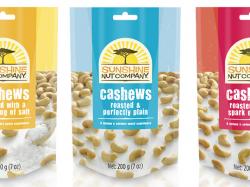
“Don’t buy our product out of pity for the poor because we’re doing this in Africa. We want you to buy our product because it is a quality product, sold at a fair price, that you enjoy eating.,” said Larson. “We launched in the US last October and since have landed Stop & Shop, Giant, Whole Foods, Martins, Raley’s, Natural Grocers, and a bunch of natural foods stores from coast to coast. We want to be a cashew brand – synonymous with hope, opportunity and transformation.”
As for the giving kids graduating from children’s centers dignity through a job one day – that’s a serious goal that will transform their lives for the better. One that is being made possible by all their fans and supporters. For more information, please visit their website – www.SunshineNuts.com
Source: Sunshine Nut Company